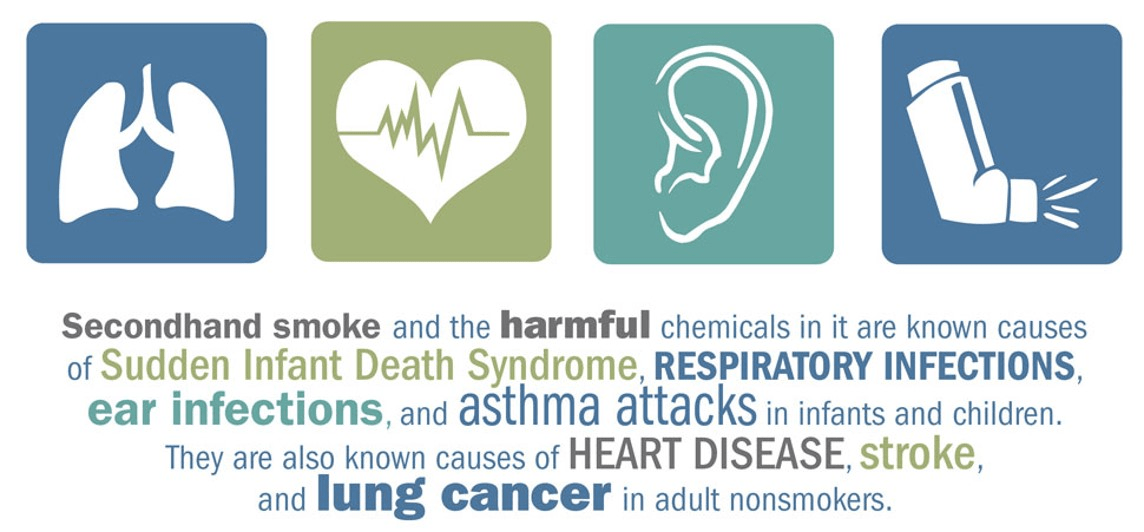
Smoke-free policies are a key strategy to reducing preventable death and disease in Michigan. Secondhand smoke kills 1,740 non-smoking Michiganders every year. It causes sudden infant death syndrome, respiratory and ear infections, and asthma attacks in infants and children. It leads to heart disease, stroke, and lung cancer in non-smoking adults. Comprehensive smoke-free policies should address e-cigarettes. E-cigarette aerosol is not harmless “water vapor.” E-cigarette aerosol usually contains nicotine and can contain formaldehyde, acrolein, volatile organic compounds like toluene, tobacco-specific nitrosamines, and heavy metals like nickel and lead. The nicotine and other chemicals are absorbed by users and bystanders, including vulnerable populations such as infants, children, and pregnant individuals. Nicotine poisoning from e-liquid is a serious concern.
Unfortunately, fans, open windows, and filters do not completely get rid of secondhand smoke. Heating, cooling, and ventilation systems can actually spread harmful smoke.
Smoke-free policies also prevent thirdhand smoke or aerosol, which is the residue that sticks to walls, ceilings, furniture, and other surfaces long after someone has smoked a cigarette or used an e-cigarette. Thirdhand smoke is especially hazardous to infants and young children because they’re often on the ground and put things in their mouths.
▶ Learn more: Explore our related webpages — The Dangers of Secondhand & Thirdhand Smoke Exposure and E-Cigarettes.


 (printable infographic) and the